This is the second homework assignment for Lasers and Optomechanics at Syracuse University.
It is due Monday, February 16, 2026
You will need to complete the questions in this jupyter notebook and submit it via gitlab
0.1Readings
Chapter 1 of Lasers by Seigman: Free eBook
2Pulsed Laser Power
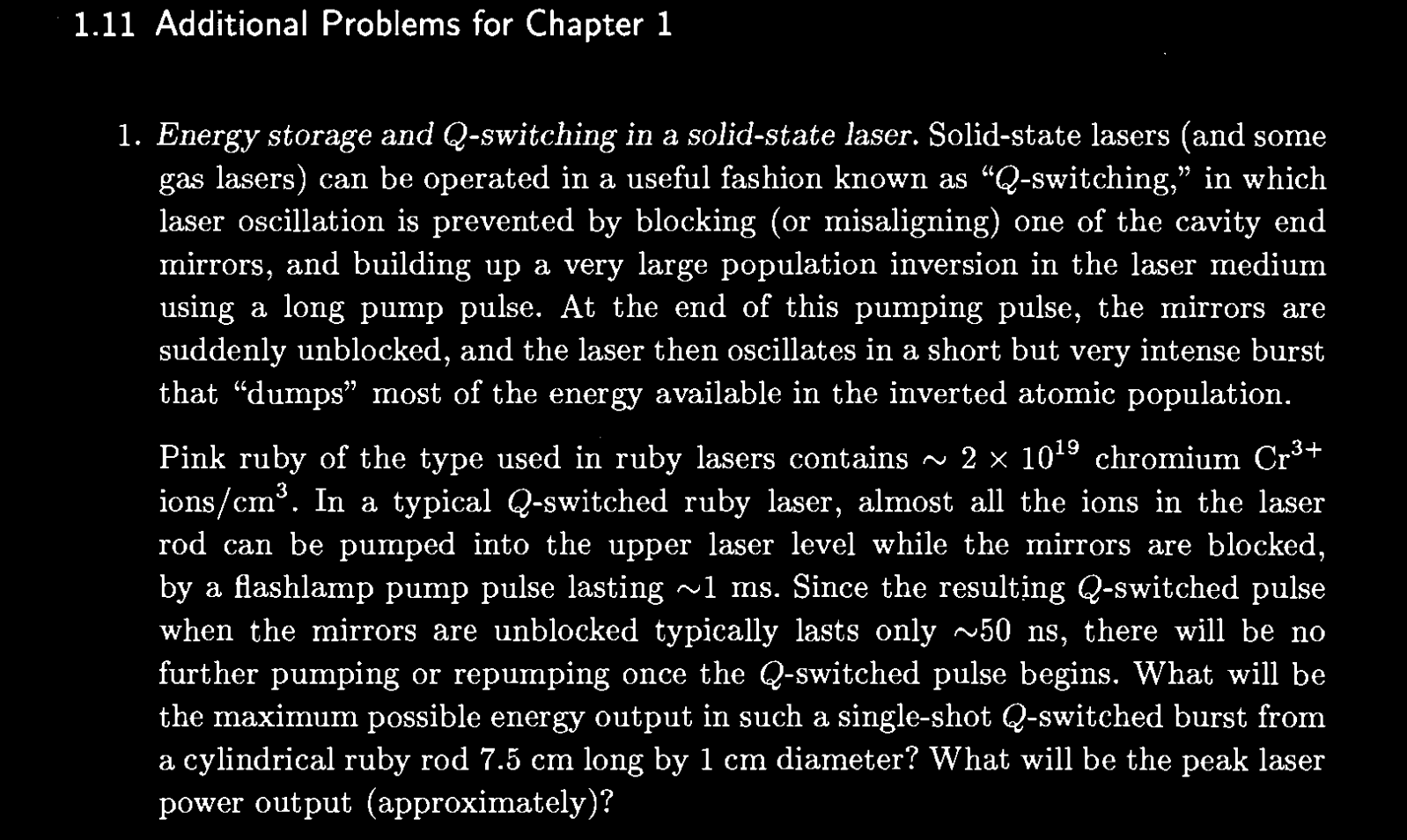
2.1Pulsed Laser Intensity

3Geometric Series Fabry-Perot
3.1Part A:
Rederive the Fabry-Perot intracavity electric field using the fact that the infinite geometric series
Hint 1: Set up some contributing fields for round-trips.
3.2Part B:
Draw a plot of the first couple of electric fields , as well as the total phasor ,
while on resonance,
while just off resonance, , but .
3.3Part C:
The previous parts we’ve assumed there is zero delay in the propogation time: i.e that the fields in the cavity are in steady state. Now let’s relax this assumption.
What will be the response of the Fabry-Perot intracavity field to a step input ?
For simplicity, assume that the input laser is exactly on resonance, such that
What is the round-trip time delay time of the cavity?
How much time must elapse for the th term of to start contributing? Write an expression for in terms of and .
Using a partial geometric series, what is the buildup for the cavity after terms are summed together?
Using the model , calculate the cavity storage time .
Compare your result to the cavity pole .
4Finesse and Loss in a Fabry-Perot
A very convenient relationship between total loss in a cavity and cavity finesse can be calculated to be (in the high-finesse limit ):
Derive this result starting with .
Hint 1: Total loss includes transmission losses for both mirrors: .
Hint 2: Write .
Hint 3: Use the binomial approximation.
Hint 4: This paper from MIT may be helpful: Loss in long-storage-time optical cavities
5Finesse and Gain in a Fabry-Perot
5.1Part A:
Assuming that we have a critically-coupled Fabry-Perot cavity,
what is the comparison between the finesse and power gain ?
5.2Part B:
Repeat Part A above for an over-coupled cavity such that .
Does the relationship change?
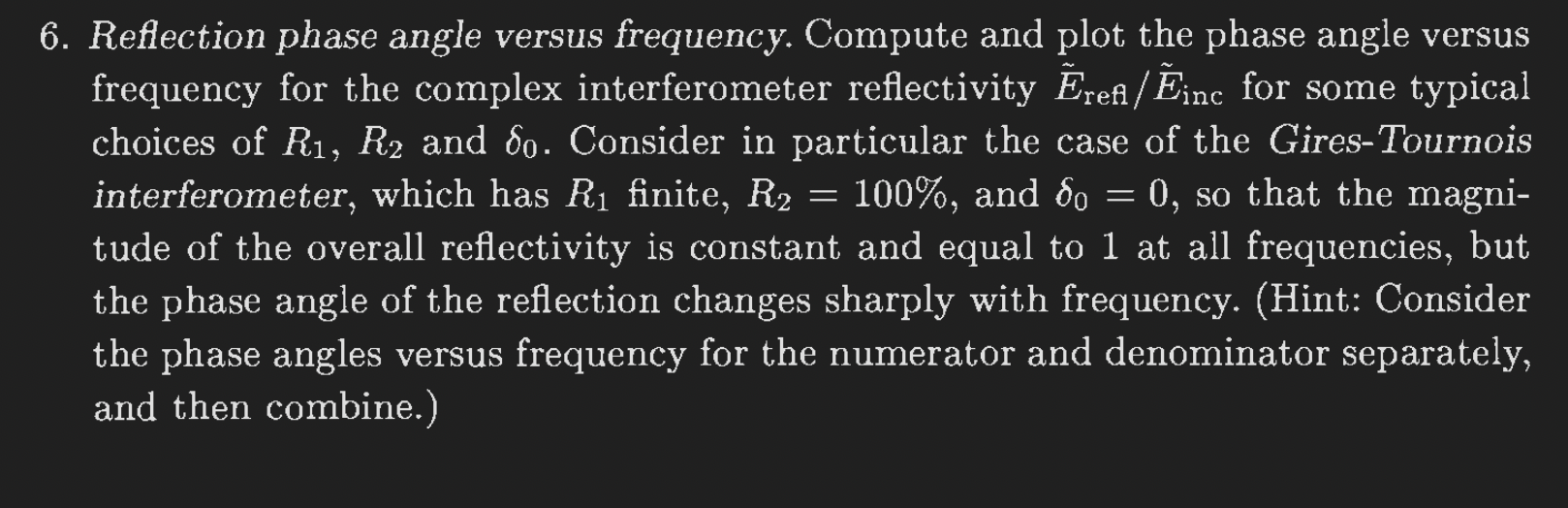
6Reflection Phase Angle vs Frequency
6.1Plots
Make Bode plots of the reflection phase vs round-trip phase where serves as the x-axis.
Hint: This is similar to our expressions , where is the reflection phase, and is the round-trip phase.
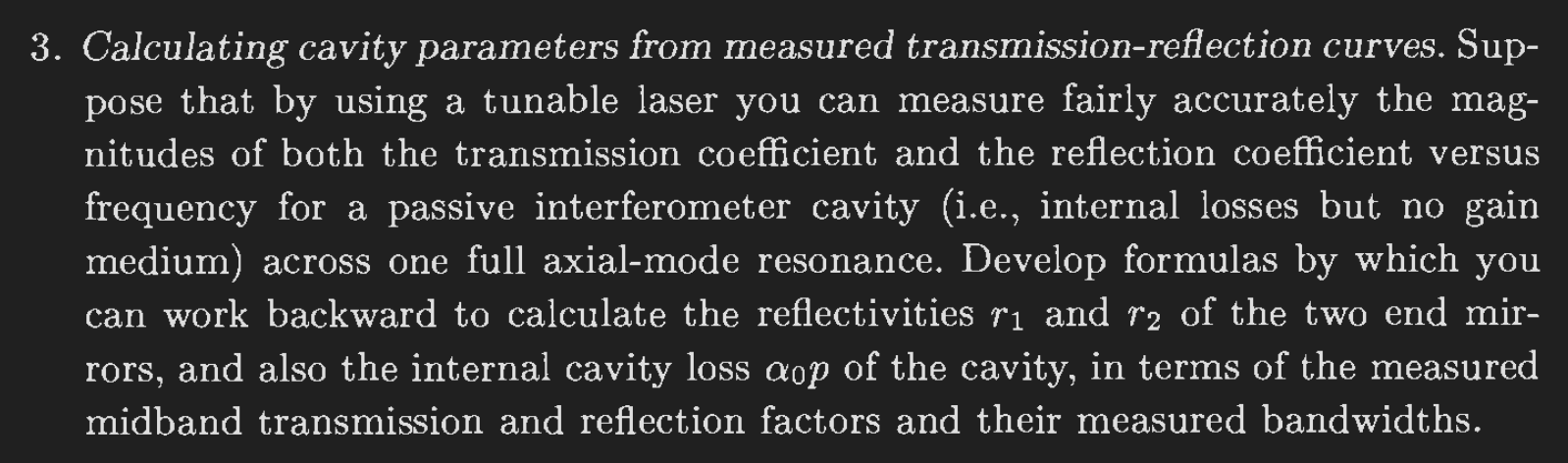
7Cavity Measurement and Modeling (Extra Credit)
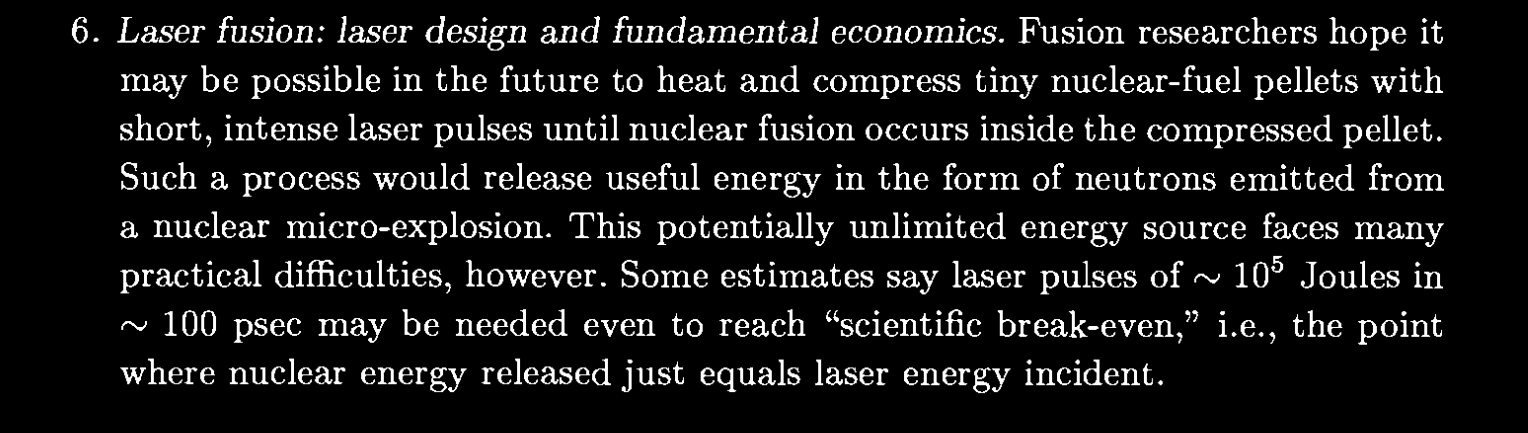
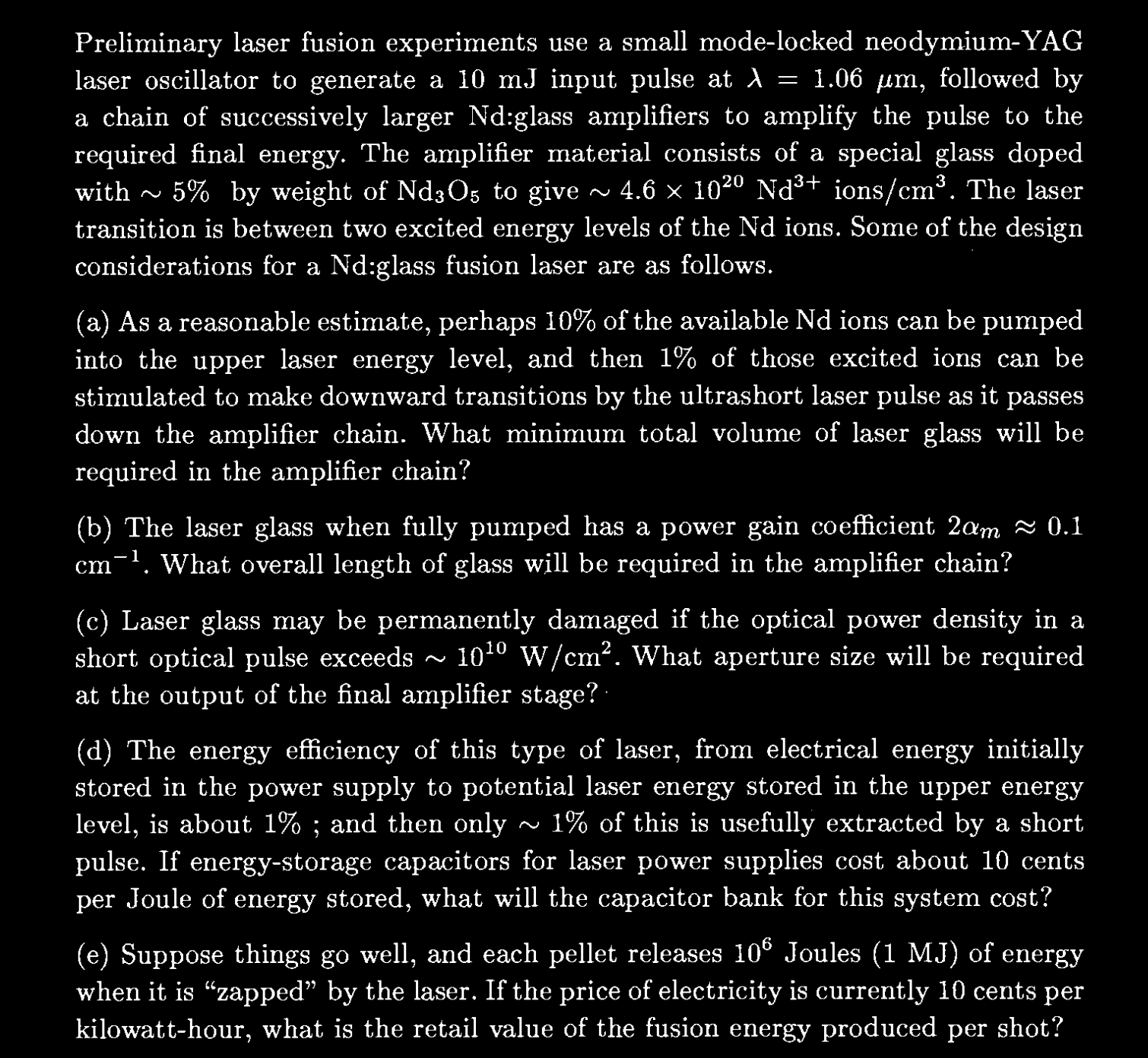
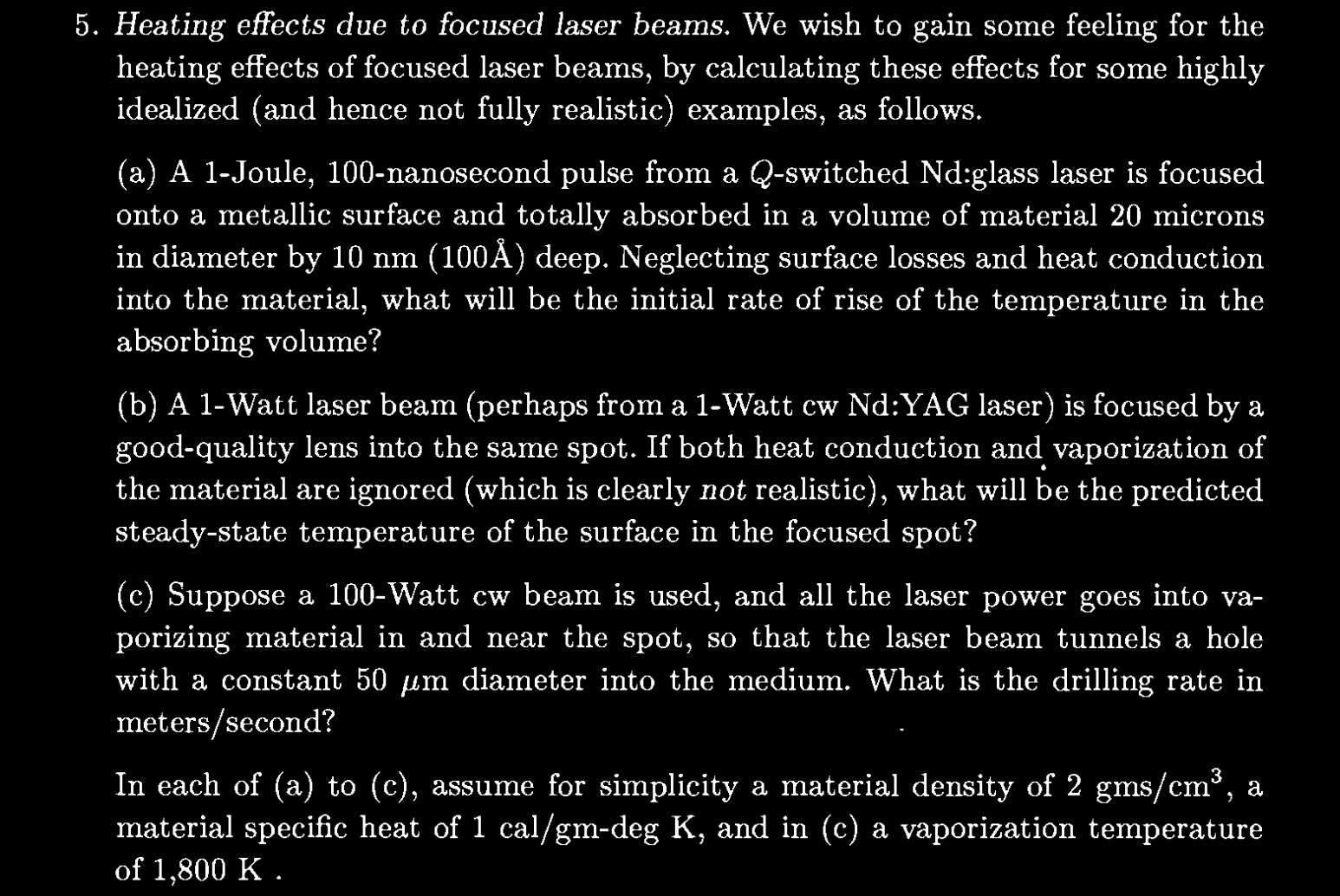
9Heating Effects (Extra Credit)